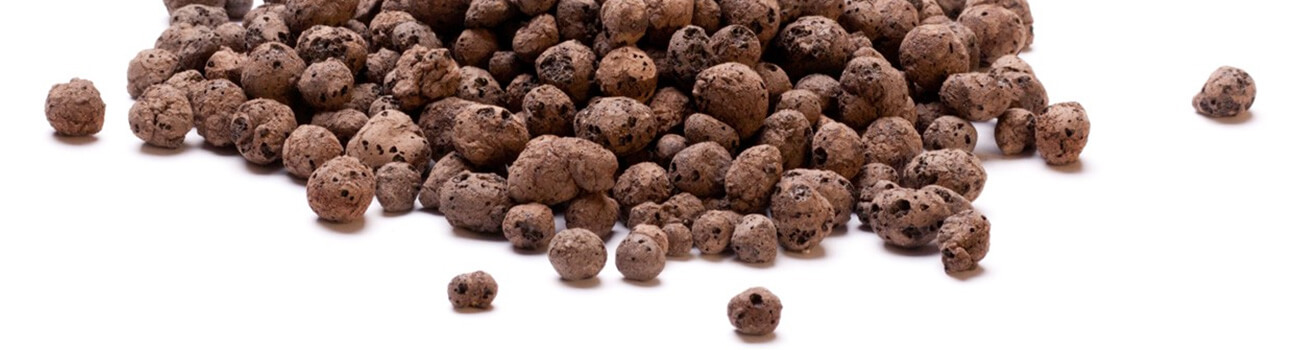
Curious to know about Expanded Clay Aggregate (ECA) ? We are here to help!!
Can I use as a top layer in traditional potting soil?
Yes, (Light Expanded Clay Aggregate), also known as clay balls or expanded clay pellets, can be used as a top layer in traditional potting soil. It can help reduce moisture loss from evaporation, deter weed growth, and provide a decorative finish to pots.
How does contribute to sustainability in hydroponics and aquaponics?
is reusable and long-lasting, which reduces the need for regular substrate replacement, contributing to sustainability. It helps save water through efficient moisture control and reduces soil-borne diseases, decreasing the need for chemical pesticides.
Is suitable for use in drought-prone areas for water-efficient gardening?
Yes, due to its high water retention capacity, or Expanded Clay Balls can be an effective medium for water-efficient gardening in drought-prone areas. It allows for controlled watering and helps prevent water wastage, thereby promoting sustainable gardening practices.
How does fare against other hydroponic substrates like Rockwool or Coco Coir?
offers unique advantages such as reusability, excellent aeration, good water retention, and a beneficial environment for root development. While each substrate has its strengths,'s reusability makes it a cost-effective choice for long-term hydroponic and aquaponic systems
Can be used in non-circulating hydroponic systems?
Yes, (Light Expanded Clay Aggregate) or Clay Balls can be used in non-circulating hydroponic systems such as the Kratky method. Its ability to retain water and air while providing a stable structure for plant support makes it a suitable choice for these systems
How does the porosity of compare to other hydroponic mediums like Perlite or Vermiculite?
(Light Expanded Clay Aggregate) tends to be more porous than Perlite or Vermiculite, making it superior in terms of water retention and aeration. Its larger size also provides better structural support for plants. This makes a versatile choice for both hydroponics and aquaponics.
Can serve as a biofilter in Aquaponics, similar to Kaldnes K1 media?
While and Kaldnes K1 media both offer high surface areas for beneficial bacteria growth, K1 is specifically designed for biofiltration with its self-cleaning ability. can support beneficial bacteria but may not entirely replace a biofilter in larger or more complex systems
Is there a difference in nutrient delivery when using compared to Coco Coir in Hydroponics?
and Coco Coir both effectively deliver nutrients in a hydroponic setup. However,'s highly porous nature can offer better aeration, promoting healthier root growth. Coco Coir, on the other hand, retains more water, which could be beneficial for water-loving plants
How does the use of in Aquaponics compare to the use of Lava Rocks?
Both and Lava Rocks are good mediums for aquaponics due to their high porosity and surface area. However, is often preferred because it's lighter, easier to handle, and less likely to cause system damage due to its soft and rounded structure.
Does outperform Rockwool in maintaining a stable root zone temperature in Hydroponics?
Both and Rockwool have good insulative properties that help maintain a stable root zone temperature. However, the larger size and greater airflow around can potentially offer better heat distribution, preventing hotspots and promoting a more uniform root zone environment.